
Recently, I returned from two months of traveling through the Dominican Republic, Greece, and Italy. It was lovely, though it now fades like a dream.
What I see with hawk-eye precision, however, is my life and my house.
Wow, do I have a lot of plants.
Walking back in after being away, I suddenly saw everything with fresh eyes. Plants cover every surface. Books lining shelves in rainbow colors. Friendly, abundant chaos. Wild things everywhere.
I thought:
This may be the home of a weirdo plant lady.
And honestly?
Yes. It is.
I looked around and declared to myself:
“I need more plants.”
Not inside. Good God, woman, enough is enough.
Outside.
Last year, in a matriarchal frenzy against whoever invented the lawn, I ripped up part of the yard and made a garden bed — an unfinished canvas waiting for me to return.
The soil was dark and rich because I had spent months composting into it — leaves, scraps, weeds, dead things, rot. All the messy remains transformed slowly into nourishment.
That is not just gardening.
That is my life.
Because painful things have happened.
Grief happened.
Loss happened.
Fear happened.
Loneliness happened.
Aging happened.
Terrible news cycles happened.
So I went to Greece and Italy, where I saw that human beings have been breaking each other’s hearts and starting wars for thousands of years.
I saw it everywhere — ancient ruins, cracked stone, olive groves growing beside the wreckage of history. Civilizations layered on top of civilizations.
And still, wildflowers bloom.
That is what struck me most.
Not the absence of destruction.
The persistence of beauty.
Forests burn and grow back greener.
Dead trees feed new roots.
Rot becomes nourishment.
Nature composts.
And we can too.
That is one of the deepest choices I have made.
I cannot choose whether painful things will happen.
They will.
But I can choose whether I let them harden on the surface of my life or whether I turn them over, work them into the soil, and let them deepen me into something richer, wiser, and more alive.
So I landed jet-lagged and slightly delirious and immediately ran to the plant nursery.
I bought blooming things. Things hummingbirds love. Things bees and butterflies land on. Pink, orange, yellow, purple, fuchsia. Tomatoes. Basil. Greek oregano. Trumpet vine. Sage.
So many plants.
Because my favorite moments from all my travels were never really the destinations themselves.
It was what they awakened in me.
Red poppies beneath olive groves in Tuscany. Purple lupine covering hillsides in Greece. Cappuccinos in sleepy morning light while dogs pranced down cobblestone streets and birds sang for the sheer glory of being alive.
Sometimes we need to step away long enough to see our own lives clearly again — to remember what we want to grow, what needs tending, what needs composting, and what no longer belongs.
Not as an escape.
As remembrance.
As restoration.
As a way of returning home more alive.
This plant obsession may absolutely be the behavior of a slightly feral 51-year-old woman living alone with cats.
But it also feels strangely sexy and rebellious.
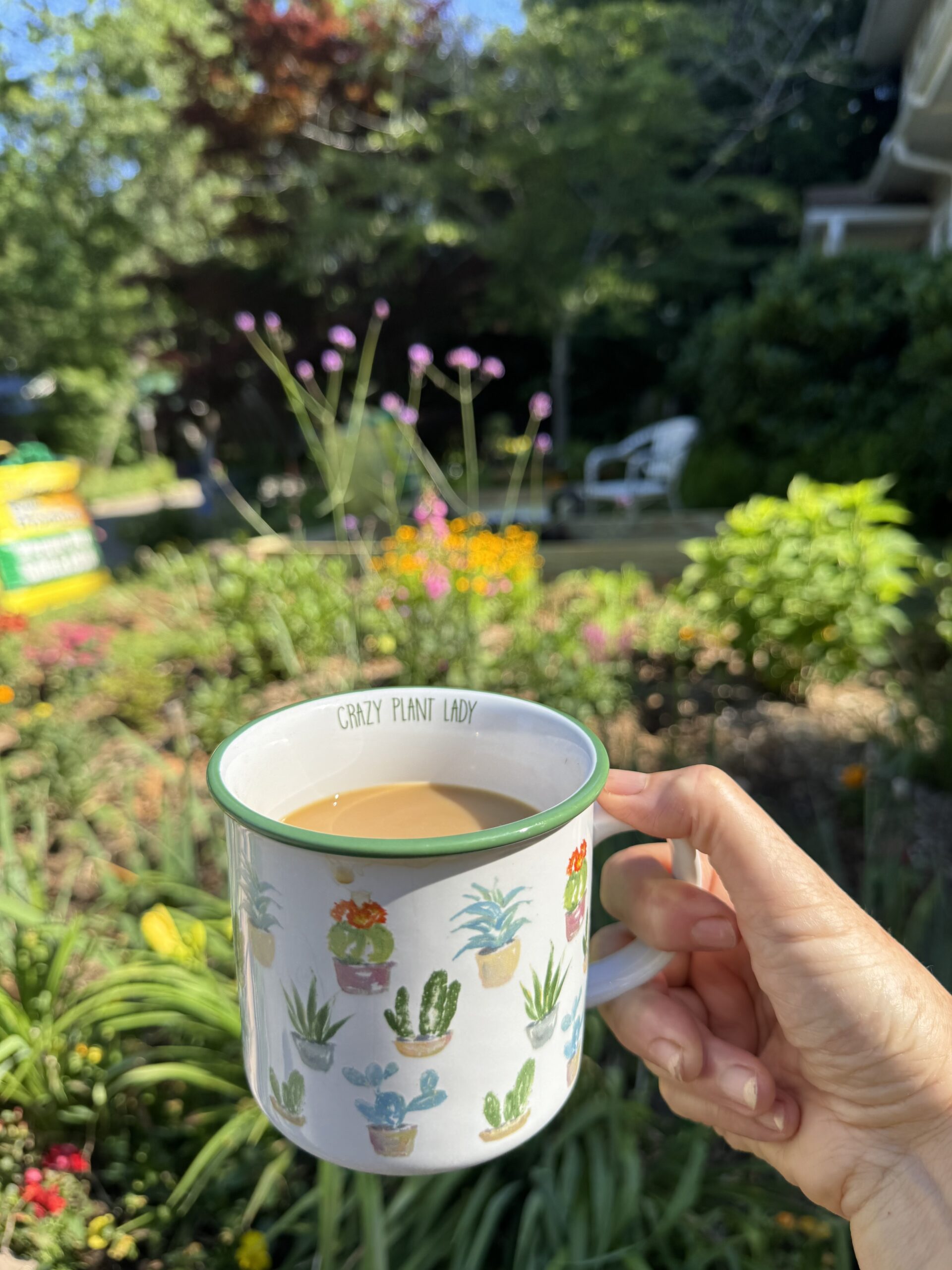
Before I answer emails, solve problems, pay bills, or absorb the latest catastrophe waiting for me on the news, I step outside and plant tomatoes and red poppies instead.
I smell the rich earth soaked with rain.
I hear birdsong.
I feel seeds and dark soil in my bare hands.
I make coffee and taste its bitter warmth slide down my throat.
I choose to be alive in my own life.
Not because life is easy.
Not because terrible things are not happening.
But because they are.
And still, we can bloom.
Not weaker, but stronger.
Not hardened, but more alive.
Not tentative, but bold and bright.
What a radical thing.
What a beautiful thing.
What a privilege to keep growing anyway.
“And the day came when the risk to remain tight in a bud was more painful than the risk it took to bloom.” — Anaïs Nin
A small invitation:
What would it look like to participate more fully in your own life?
To plant something beautiful.
To rip out what no longer belongs.
To soften instead of harden.
To trust that rich soil can come from even the hardest seasons.
What still wants to bloom in you?


The picture works!